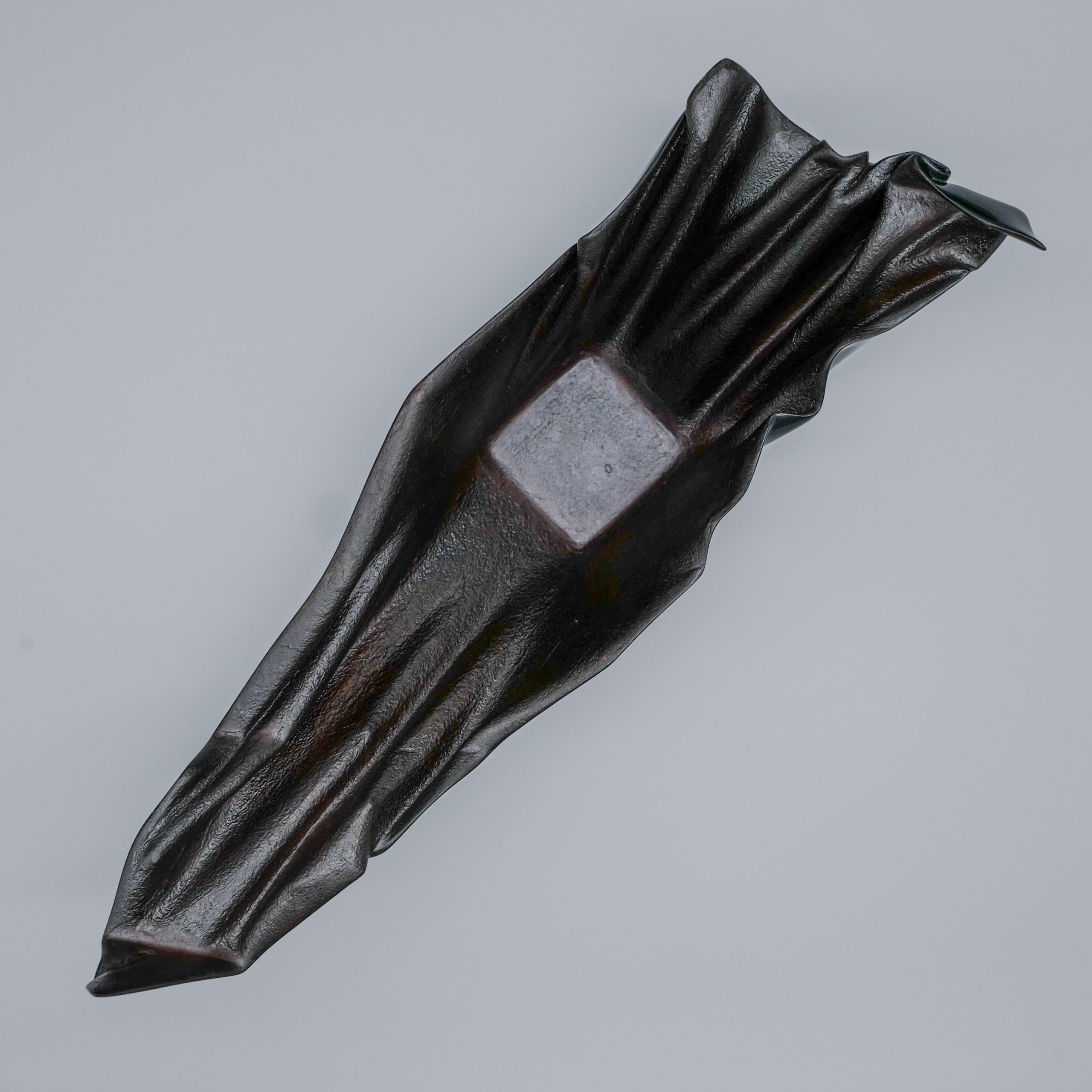
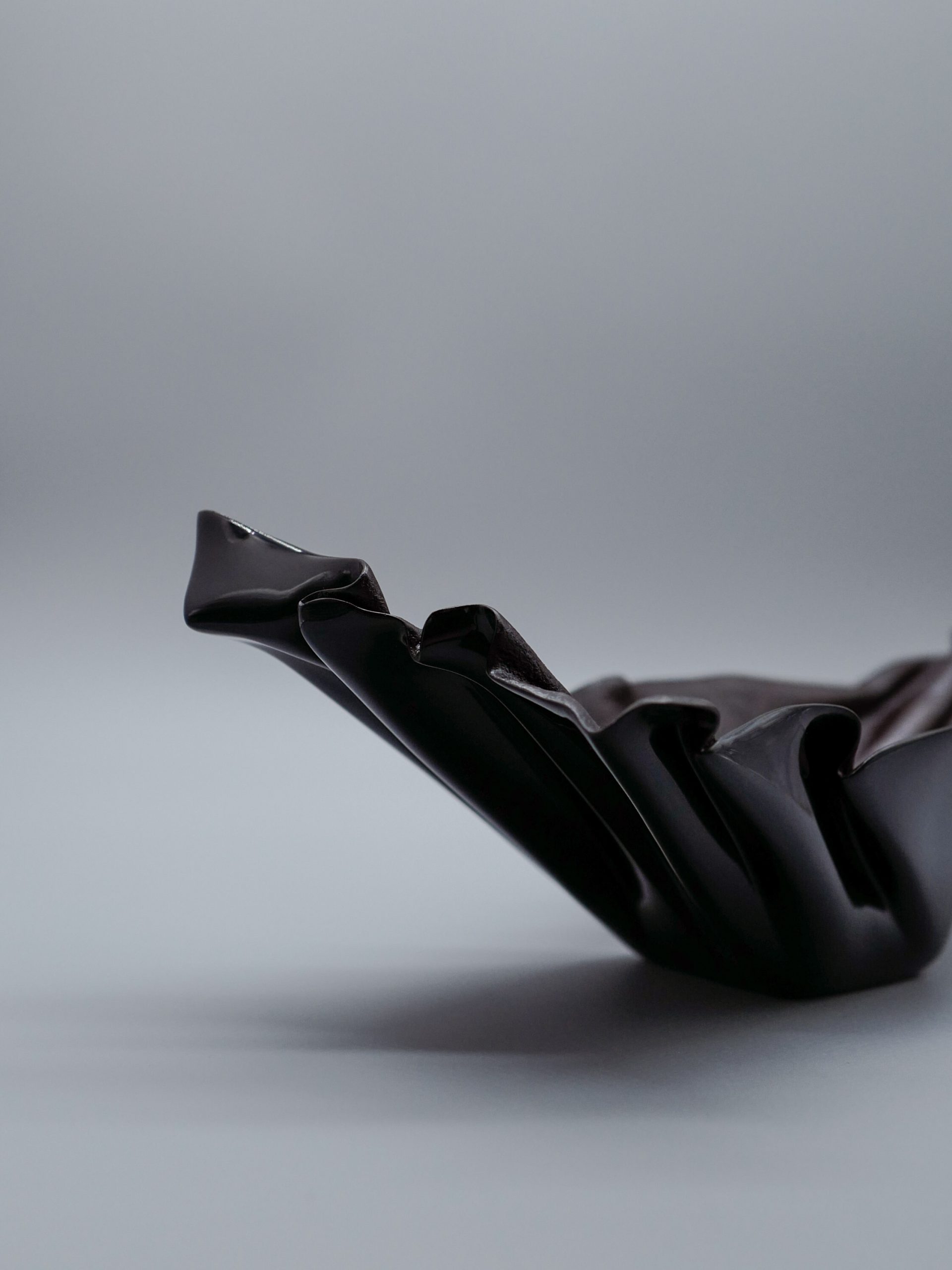
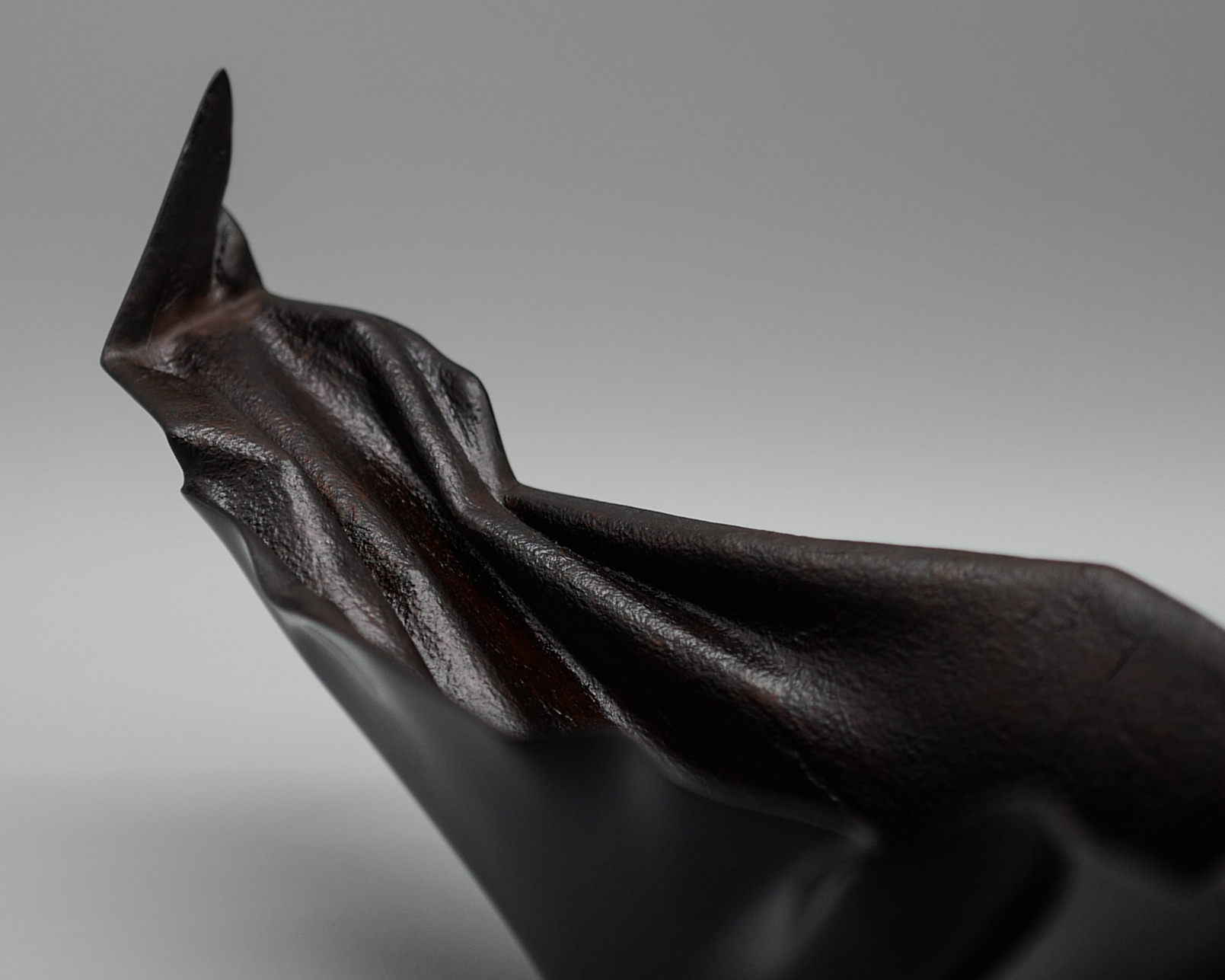
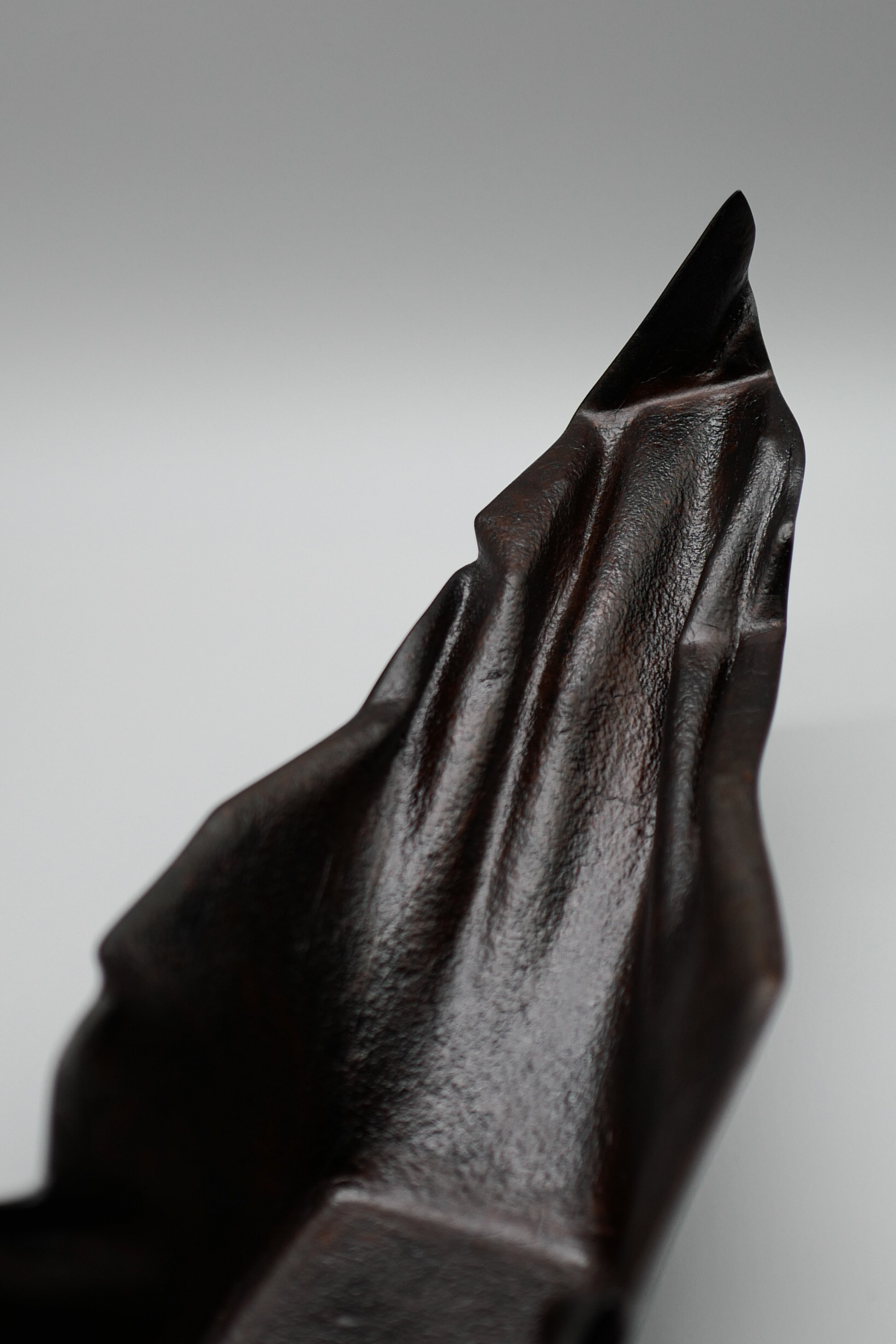
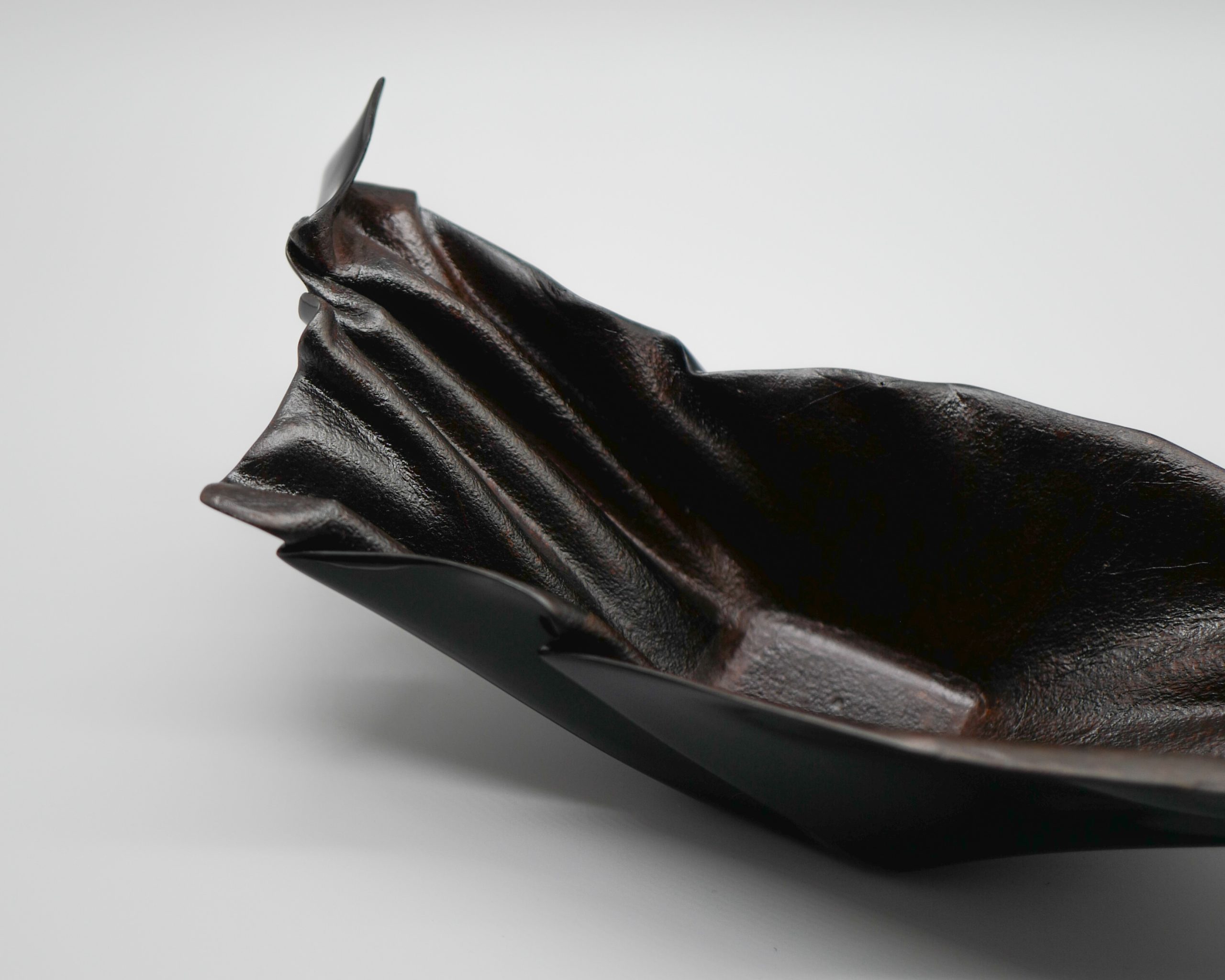
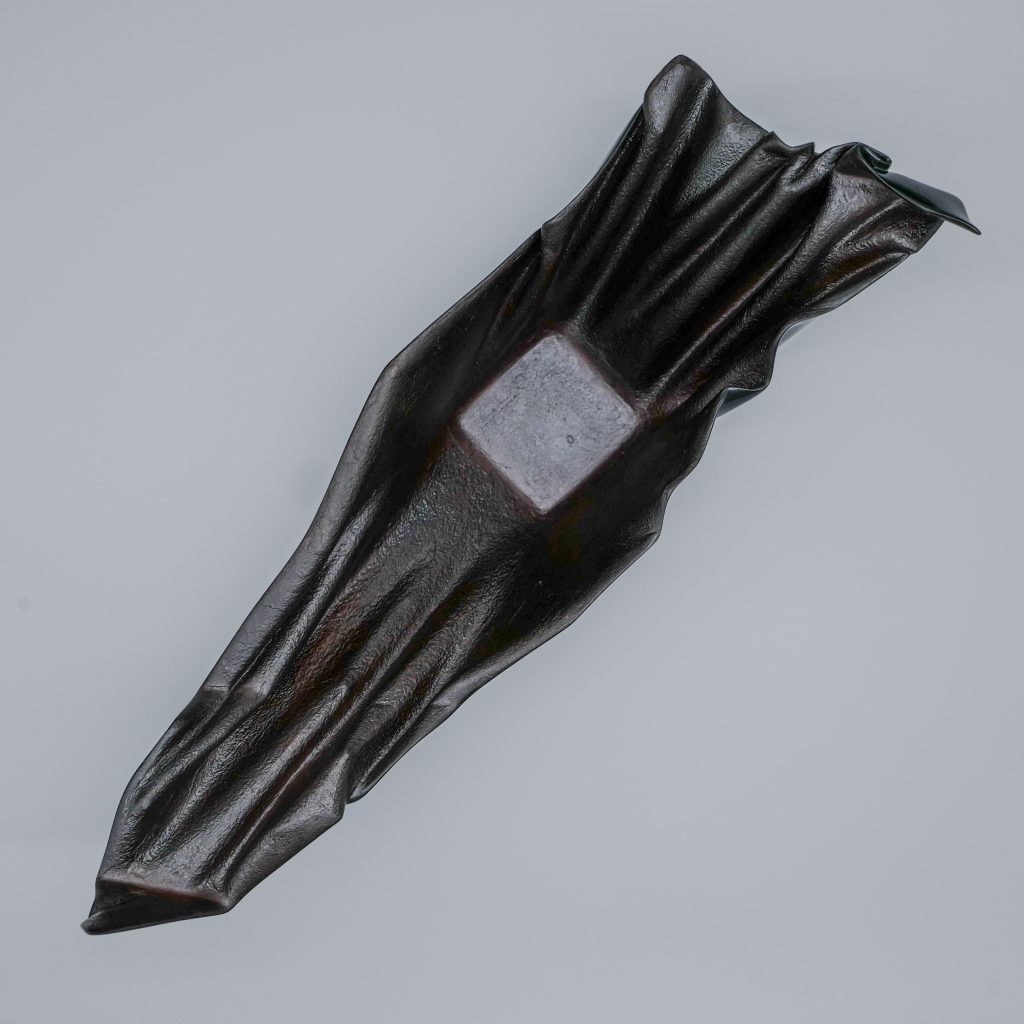
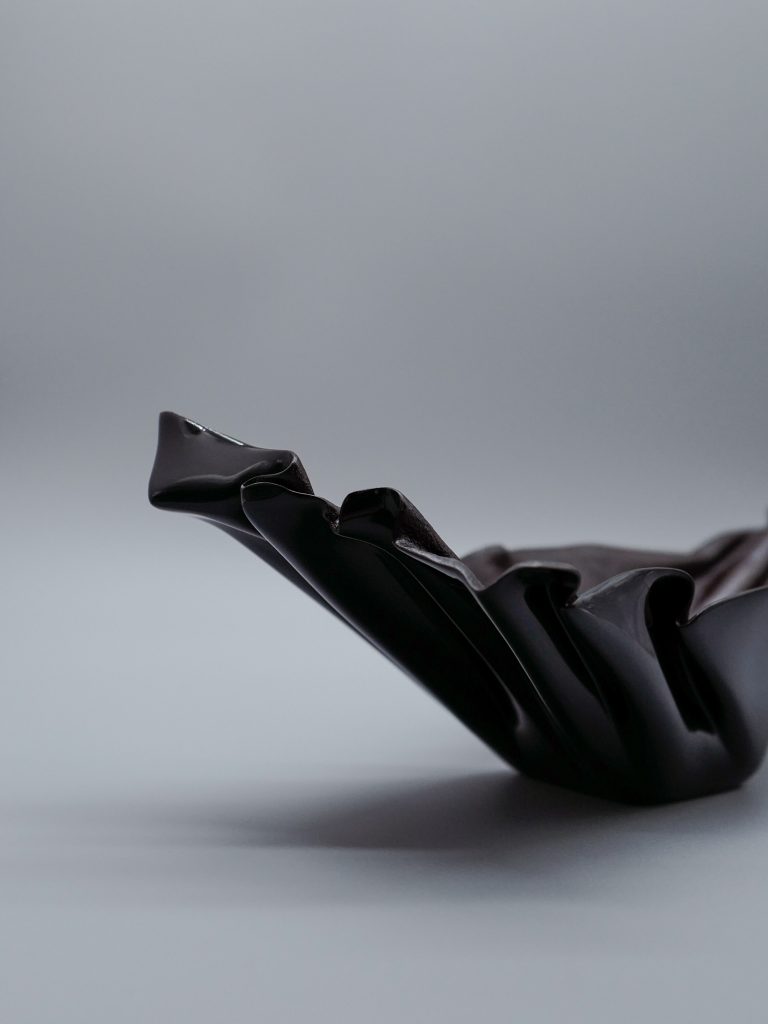
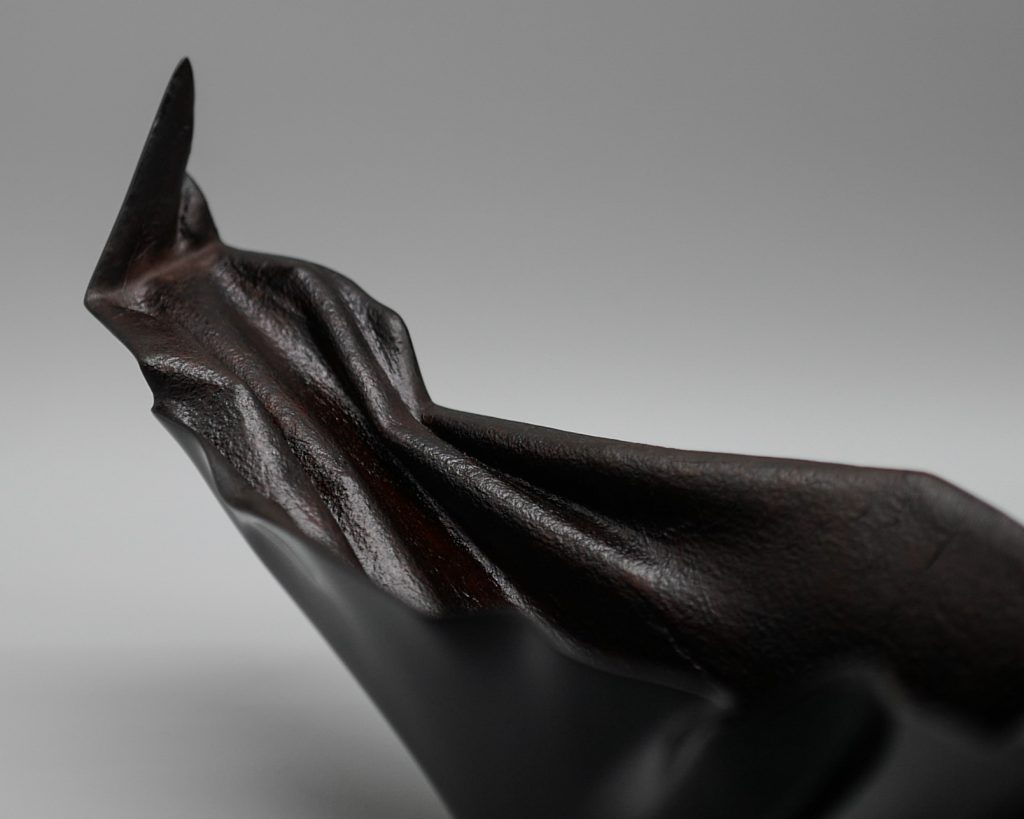
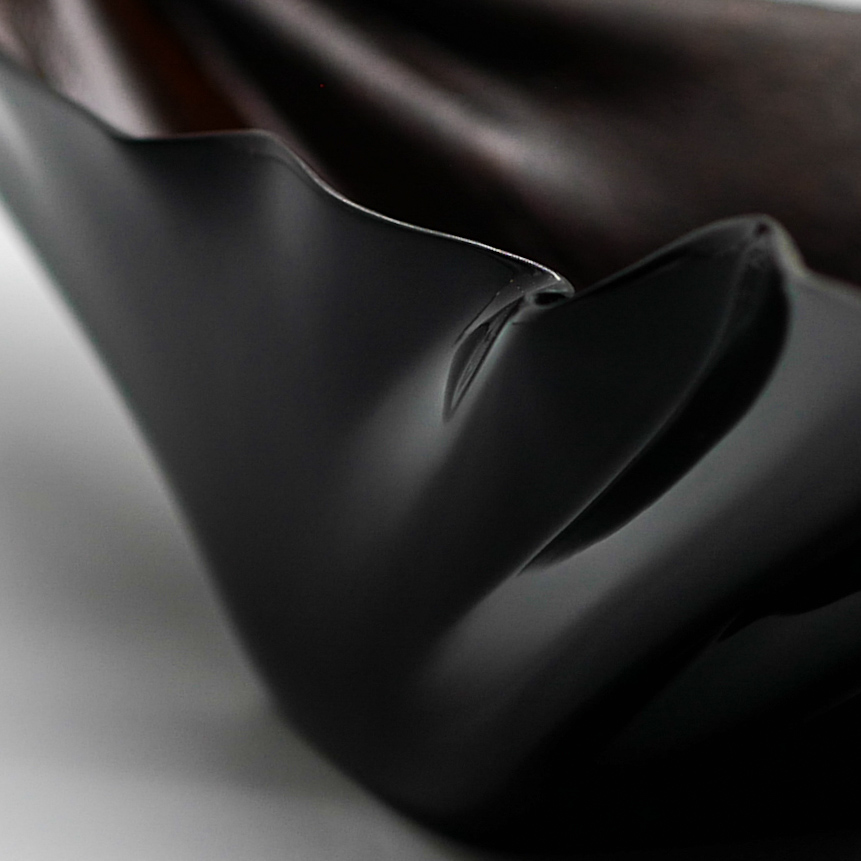
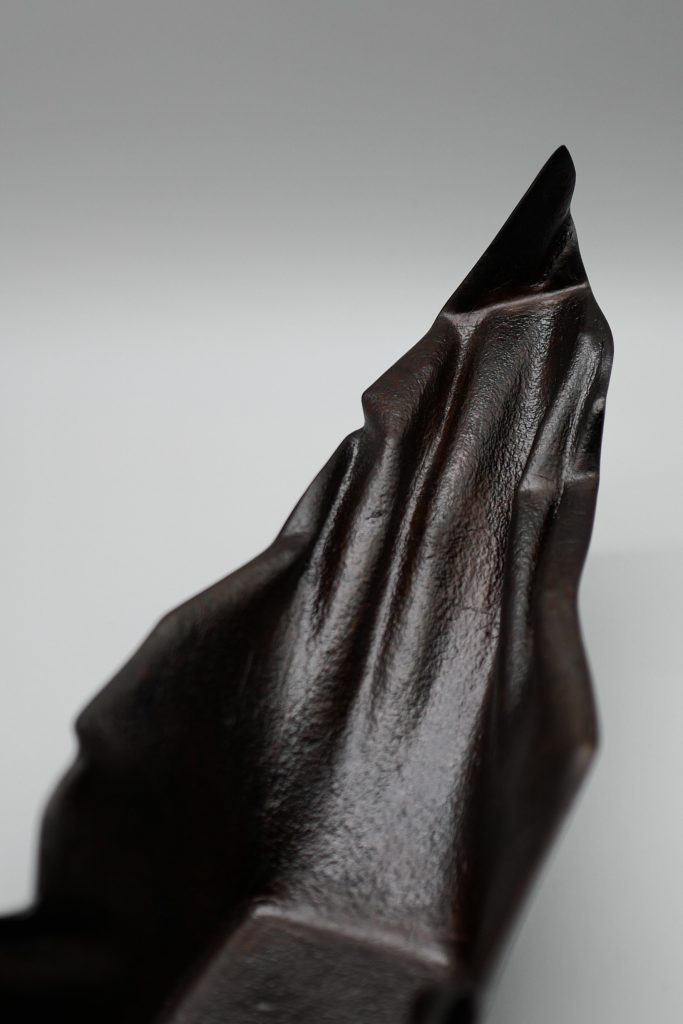
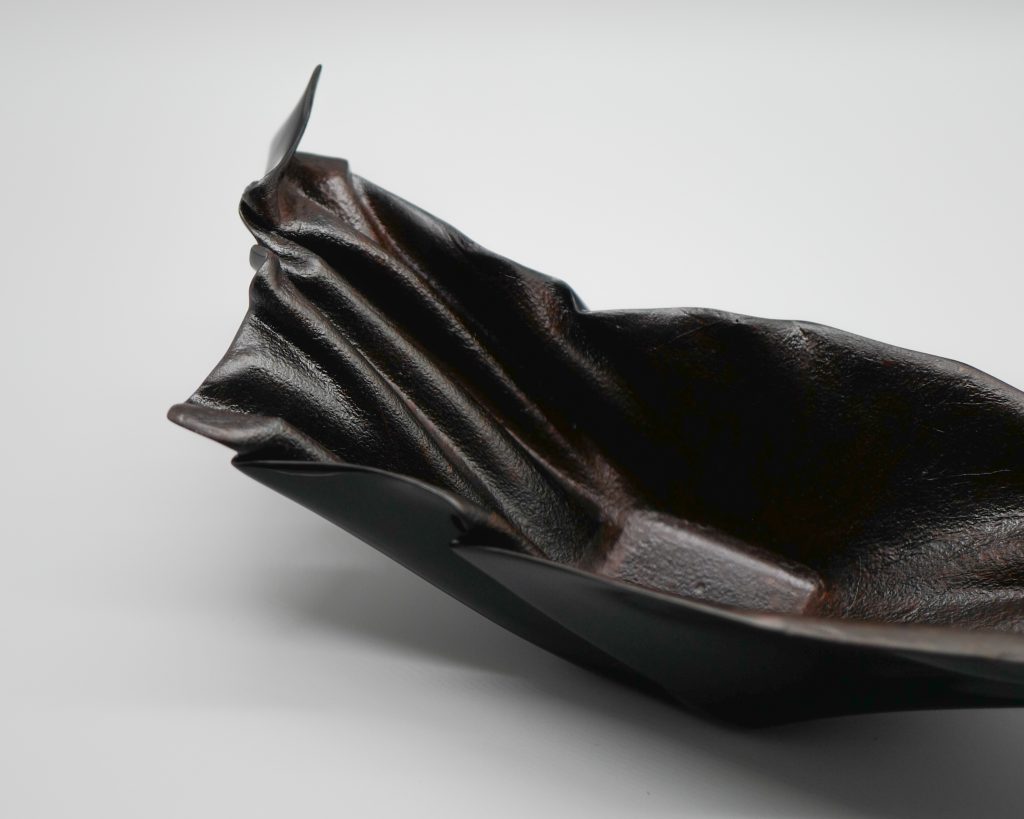
The Artist : “This piece is from the Wind series. It’s a reverie full of childlike innocence, a small boat carrying a dream box set sail in the wind and sea heading into the horizon, the future. The work is made of stretched leather, with unique shapes formed by random chance. One end of the work is raised upward, and the direction it leads is the finishing touch of the shape. The interior of the work is pasted with Japanese washi paper, which is like a broad and compassionate mind that can accommodate hundreds of rivers. The exterior is polished with black paint, giving it a strong and indestructible appearance.”
About the technique
Wei Nan’s works are created using Shippi 漆革 technique, using leather as the carcass for lacquer art works. Shippi first appeared in Japan during the Asuka Period (592-710). Judging from the unearthed cultural relics, this technique was mostly used to make various practical utensils such as storage boxes.
Wei Nan uses various forms of leather for her works. The expression of her works are sometimes determined by the intrinsic nature of the leather she is working with. The laborious process starts with form foundation. The leather is vigorously hand-stretched into its intended form and held in shape by applying base layers of raw lacquer extracted from the lacquer tree. The fiber proteins in the leather will fully absorb the lacquer and begin to stiffen. This process is repeated 3-4 times to intensify the hardening of the leather. Hemp cloth or linen are then layered on several times to make shape stronger. Ash powder of varying fineness, jinoko (coarse) and tonoko (fine), are applied together with lacquer onto the surface 5 times consecutively. Jinoko and Tonoko are commonly used traditionally in restoring lacquerware. This is then followed by an average 3 layers of primer with each layer being sanded down to silky smooth and blemish-free surface before applying the next layer. Final layers of lacquer are then painted on, sanded and polished to achieve complete smoothness and lustre shine.
Drying intervals are needed for each stage. The works are dried in a light, temperature and humidity-controlled environment. Therefore, the average completion time for a leather lacquer creation can range from an average of 1 to 5 months depending on the size and complexity of the lacquer work. In some of her works, Japanese washi paper is used too.
Next : The Wind Rises